


How does the concept of "practical aesthetics" in modern dining sideboards harmonize the functional requirements of storage with the visual demands of display and life rituals?
Release Time : 2026-04-15
The modern dining room has undergone a profound transformation, evolving from a strictly utilitarian space for consumption into a multifaceted environment that reflects personal identity and lifestyle. Central to this evolution is the dining sideboard, a piece of furniture that has shed its reputation as a mere storage vessel to become a focal point of "practical aesthetics." This design philosophy seeks to bridge the often-disparate worlds of rigorous functionality and artistic expression. In the contemporary home, a sideboard must perform the heavy lifting of organization—hiding the clutter of daily life—while simultaneously serving as a stage for display and the rituals of hospitality. The harmonization of these elements requires a sophisticated approach to design, where every drawer, shelf, and light source is calibrated to support both the mechanics of living and the poetry of the home.
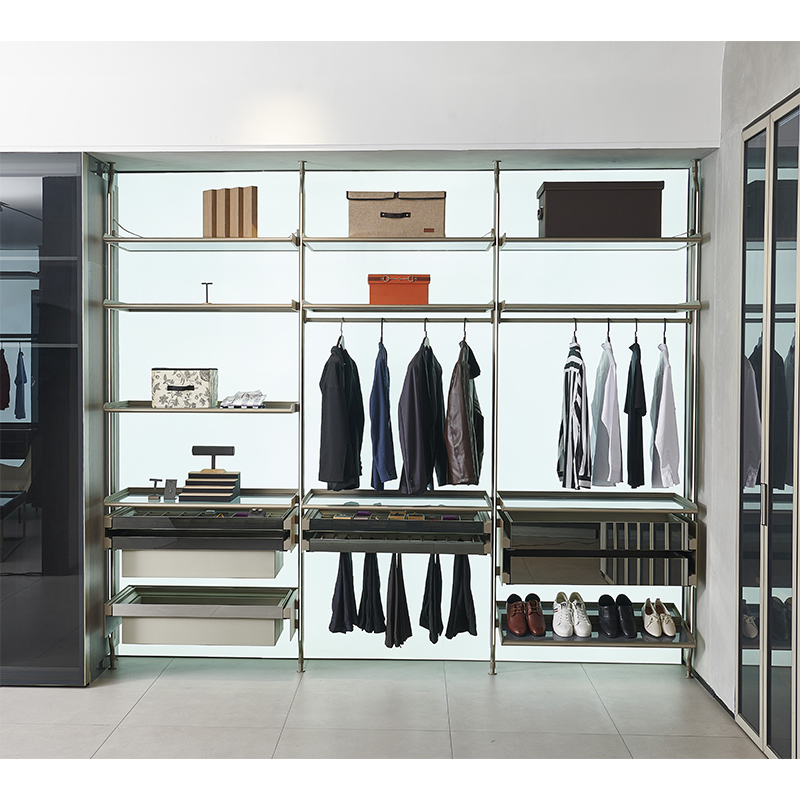
At the core of practical aesthetics is the resolution of the "visibility paradox." Homeowners desire spaces that look curated and serene, yet they require immediate access to a vast array of items, from cutlery and linens to board games and electronics. Modern sideboards address this through a strategic balance of concealment and revelation. Closed cabinetry and deep drawers are utilized to sequester visual noise, effectively reducing the cognitive load of the room by hiding utilitarian objects. Conversely, open shelving or glass-fronted sections are reserved for "visual merchandising"—the display of ceramics, art books, or travel souvenirs. This selective visibility allows the user to control the narrative of the room, ensuring that the sideboard acts as a gallery for personal history while functioning as a silent workhorse for household logistics.
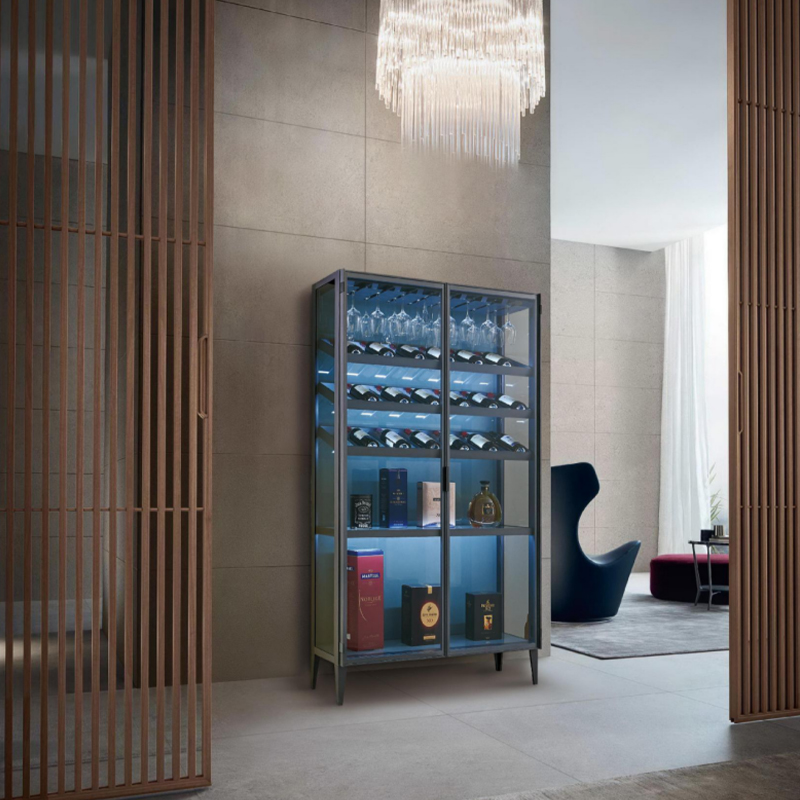
The integration of technology, specifically within the realm of specialized storage like wine cabinets, exemplifies this harmonization. The inclusion of a transparent glass wine cabinet transforms the act of storing bottles into an aesthetic exhibition. Here, the functional requirement of preserving wine meets the visual desire for a sparkling focal point. By utilizing transparent materials, the sideboard invites the eye to penetrate the furniture's volume, adding depth and lightness to what could otherwise be a bulky object. This feature supports the "life ritual" of dining; the selection of a bottle becomes a ceremonial moment, enhanced by the visibility of the collection. It turns a passive storage unit into an active participant in the entertainment experience, elevating the atmosphere of the meal before the first course is even served.
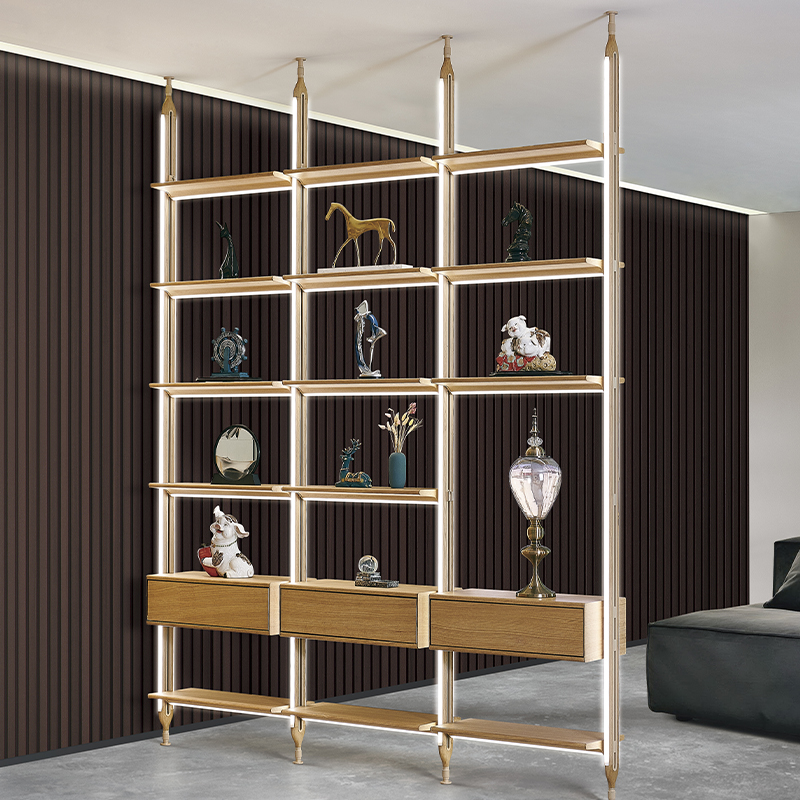
Lighting plays a pivotal role in merging utility with ambiance, moving beyond simple illumination to become a tool for mood setting. The implementation of intelligent lighting systems, such as inner-layer light proximity switches, demonstrates a commitment to seamless interaction. When a user opens a cabinet door, the interior illuminates automatically, a feature that is intensely practical for locating items in deep storage spaces. However, the aesthetic impact is equally significant. The warm glow spilling from within the cabinetry creates a sense of luxury and warmth, highlighting textures and colors of the stored items. This interplay of light and shadow adds a layer of sophistication, ensuring that the furniture feels "alive" and responsive to human presence. The use of low-voltage 12V power supplies further underscores this harmony, prioritizing safety and reliability without compromising the sleekness of the design.
The concept of modularity further supports practical aesthetics by acknowledging the diverse and changing nature of home scenes. The ability to purchase a sideboard as a whole set or as individual units allows the furniture to adapt to the specific architectural constraints and functional needs of the user. In a smaller apartment, a compact unit might serve as a coffee station, while in a larger dining hall, a series of units might create a sweeping wall of storage. This flexibility ensures that the aesthetic remains cohesive regardless of the scale. It respects the user's agency, allowing them to curate their furniture just as they would an art collection, ensuring that the piece fits their life rather than forcing their life to fit the piece.
Furthermore, the materials and finishes chosen for these sideboards are often selected to withstand the rigors of daily use while maintaining a high-end visual appeal. The durability of the construction ensures that the "practical" aspect does not degrade the "aesthetic" over time. High-quality hardware, such as soft-close hinges and robust drawer runners, contributes to the tactile experience of the furniture. The sound of a door closing silently, or the smooth glide of a drawer, reinforces the perception of quality. These sensory details are crucial; they communicate that the object is designed for human interaction, bridging the gap between the visual beauty of the object and the physical act of using it.
Ultimately, the modern dining sideboard serves as a testament to the idea that form and function are not opposing forces but complementary partners. By integrating features like transparent displays, intelligent lighting, and modular configurations, designers have created furniture that supports the complex rhythms of modern life. It accommodates the messiness of existence by hiding it away, while celebrating the moments of joy through display and light. In doing so, the sideboard transcends its role as a simple cabinet, becoming a guardian of rituals and a curator of beauty, perfectly embodying the ethos of practical aesthetics.
At the core of practical aesthetics is the resolution of the "visibility paradox." Homeowners desire spaces that look curated and serene, yet they require immediate access to a vast array of items, from cutlery and linens to board games and electronics. Modern sideboards address this through a strategic balance of concealment and revelation. Closed cabinetry and deep drawers are utilized to sequester visual noise, effectively reducing the cognitive load of the room by hiding utilitarian objects. Conversely, open shelving or glass-fronted sections are reserved for "visual merchandising"—the display of ceramics, art books, or travel souvenirs. This selective visibility allows the user to control the narrative of the room, ensuring that the sideboard acts as a gallery for personal history while functioning as a silent workhorse for household logistics.
The integration of technology, specifically within the realm of specialized storage like wine cabinets, exemplifies this harmonization. The inclusion of a transparent glass wine cabinet transforms the act of storing bottles into an aesthetic exhibition. Here, the functional requirement of preserving wine meets the visual desire for a sparkling focal point. By utilizing transparent materials, the sideboard invites the eye to penetrate the furniture's volume, adding depth and lightness to what could otherwise be a bulky object. This feature supports the "life ritual" of dining; the selection of a bottle becomes a ceremonial moment, enhanced by the visibility of the collection. It turns a passive storage unit into an active participant in the entertainment experience, elevating the atmosphere of the meal before the first course is even served.
Lighting plays a pivotal role in merging utility with ambiance, moving beyond simple illumination to become a tool for mood setting. The implementation of intelligent lighting systems, such as inner-layer light proximity switches, demonstrates a commitment to seamless interaction. When a user opens a cabinet door, the interior illuminates automatically, a feature that is intensely practical for locating items in deep storage spaces. However, the aesthetic impact is equally significant. The warm glow spilling from within the cabinetry creates a sense of luxury and warmth, highlighting textures and colors of the stored items. This interplay of light and shadow adds a layer of sophistication, ensuring that the furniture feels "alive" and responsive to human presence. The use of low-voltage 12V power supplies further underscores this harmony, prioritizing safety and reliability without compromising the sleekness of the design.
The concept of modularity further supports practical aesthetics by acknowledging the diverse and changing nature of home scenes. The ability to purchase a sideboard as a whole set or as individual units allows the furniture to adapt to the specific architectural constraints and functional needs of the user. In a smaller apartment, a compact unit might serve as a coffee station, while in a larger dining hall, a series of units might create a sweeping wall of storage. This flexibility ensures that the aesthetic remains cohesive regardless of the scale. It respects the user's agency, allowing them to curate their furniture just as they would an art collection, ensuring that the piece fits their life rather than forcing their life to fit the piece.
Furthermore, the materials and finishes chosen for these sideboards are often selected to withstand the rigors of daily use while maintaining a high-end visual appeal. The durability of the construction ensures that the "practical" aspect does not degrade the "aesthetic" over time. High-quality hardware, such as soft-close hinges and robust drawer runners, contributes to the tactile experience of the furniture. The sound of a door closing silently, or the smooth glide of a drawer, reinforces the perception of quality. These sensory details are crucial; they communicate that the object is designed for human interaction, bridging the gap between the visual beauty of the object and the physical act of using it.
Ultimately, the modern dining sideboard serves as a testament to the idea that form and function are not opposing forces but complementary partners. By integrating features like transparent displays, intelligent lighting, and modular configurations, designers have created furniture that supports the complex rhythms of modern life. It accommodates the messiness of existence by hiding it away, while celebrating the moments of joy through display and light. In doing so, the sideboard transcends its role as a simple cabinet, becoming a guardian of rituals and a curator of beauty, perfectly embodying the ethos of practical aesthetics.