


In open-plan kitchens, how can sideboards serve as a key element for visual transition and functional connection?
Release Time : 2025-12-17
In modern residential design, open-plan kitchens are highly favored for their transparency, interactivity, and sense of spatial extension. However, establishing a natural visual rhythm and functional boundaries between the kitchen and the living room or dining room, avoiding a cluttered feeling of "openness," becomes a crucial design challenge. Here, sideboards transcend mere furniture for storing tableware; they cleverly assume the dual role of visual transition and functional connection, becoming an indispensable "flexible partition" and living hub in open spaces.
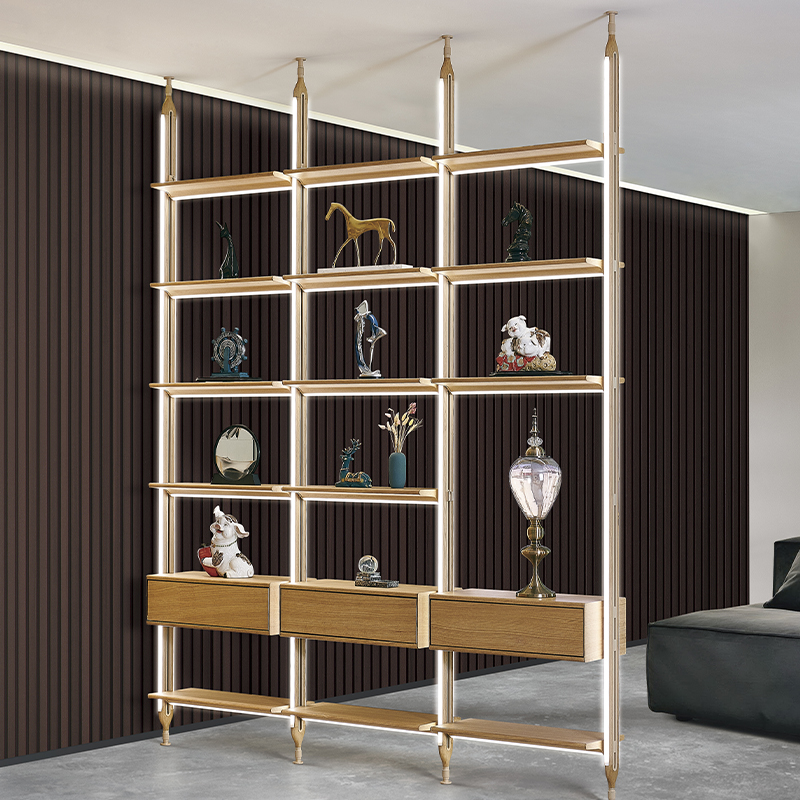
Visually, sideboards, through the careful arrangement of materials, colors, and volumes, create soft boundaries within open areas. Unlike walls that abruptly divide spaces, they guide the flow of vision without obstructing it, using a semi-open, semi-enclosed form. For example, the upper part uses frosted glass or openwork grilles to maintain spatial transparency; the middle section incorporates warm lighting strips to create a visual focal point; and the lower part uses warm wood veneer or stable stone slabs to create a sense of stability. This "light on top, heavy on the bottom, interplay of solid and void" design softens the smoky atmosphere of the kitchen work area while creating a cozy dining corner, achieving the aesthetic ideal of "separation without complete disconnection" found in Eastern design.
Functionally, the sideboard is a natural extension of the kitchen workflow. After cooking, hot dishes can be temporarily placed on the countertop, with condiments and cutlery readily available. After meals, tasks such as putting away plates and glasses, displaying drinks, and brewing coffee can all be completed on the sideboard, avoiding frequent trips back and forth to the kitchen and improving workflow efficiency. Furthermore, many modern sideboards integrate concealed small electrical appliances—such as built-in mini-fridges, water purifiers, coffee makers, or electric kettles—upgrading them to a family "drink station" or "meal preparation hub." This front-mounted functionality not only reduces the burden on the kitchen countertop but also makes daily dining more relaxed and fluid.
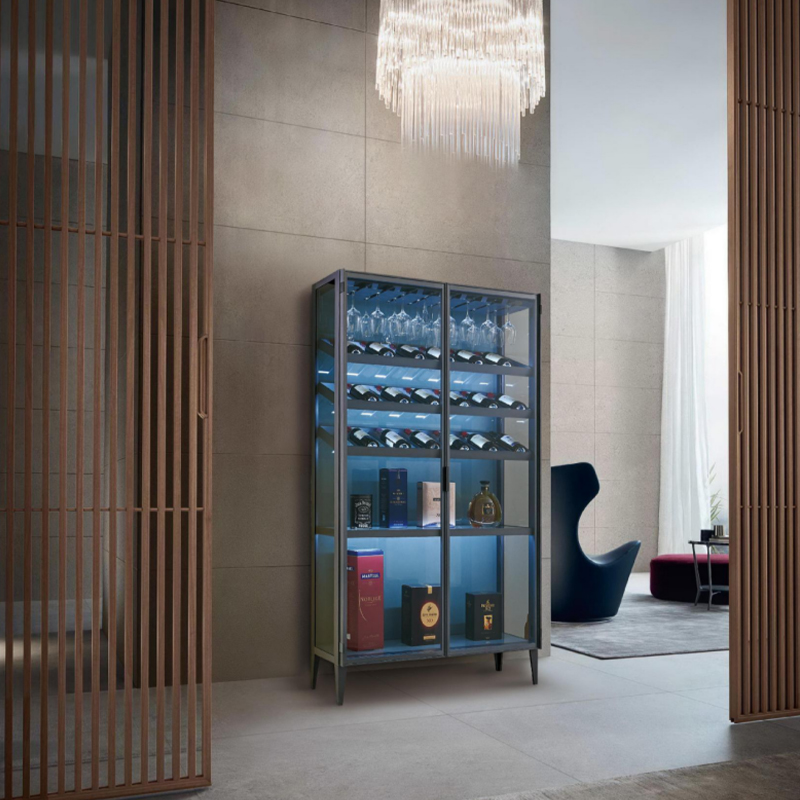
In addition, the sideboard also carries implicit social and display value. In an open layout, the kitchen is no longer a closed-off back-of-house area but a stage for family communication and interaction with friends. The glass doors of the sideboard display exquisite porcelain, collectible wine bottles, or travel souvenirs, silently expressing the homeowner's taste; when temporarily used as a bar or buffet, it fosters a relaxed social atmosphere. It is both a container for life and a medium for emotions, bridging the gap between everyday life and poetic sentiment.
The choice of materials and details further enhances its connecting role. If the kitchen is dominated by cool-toned stainless steel and quartz, the sideboard can be harmonized with warm wood tones or rattan elements; if the living room leans towards minimalism, the sideboard can continue the overall language with a handle-less design and a unified finish. This echoing of materials and variation in rhythm creates a space that is both layered and unified.
Finally, the scale and placement of the sideboard are carefully considered. It is often placed on the side wall of the kitchen exit or along the extension of the island, neither obstructing passage nor hindering movement, while creating a natural circulation path. A moderately high countertop can also serve as a temporary work area or a corner for children to do their homework, further blurring functional boundaries and fitting the diverse lifestyles of modern families.
In conclusion, in open kitchens, sideboards have long transcended their traditional role as storage. They use flexible volumes to divide space, multifunctional spaces to connect daily life, and delicate materials to engage with the environment, becoming a hub connecting cooking, dining, socializing, and display. They don't overshadow the space, but quietly support the order and warmth of daily life—because truly good design lies not in partitions, but in connections; not in concealment, but in presentation. Within this small space, the warmth and ritual of home coexist harmoniously.
Visually, sideboards, through the careful arrangement of materials, colors, and volumes, create soft boundaries within open areas. Unlike walls that abruptly divide spaces, they guide the flow of vision without obstructing it, using a semi-open, semi-enclosed form. For example, the upper part uses frosted glass or openwork grilles to maintain spatial transparency; the middle section incorporates warm lighting strips to create a visual focal point; and the lower part uses warm wood veneer or stable stone slabs to create a sense of stability. This "light on top, heavy on the bottom, interplay of solid and void" design softens the smoky atmosphere of the kitchen work area while creating a cozy dining corner, achieving the aesthetic ideal of "separation without complete disconnection" found in Eastern design.
Functionally, the sideboard is a natural extension of the kitchen workflow. After cooking, hot dishes can be temporarily placed on the countertop, with condiments and cutlery readily available. After meals, tasks such as putting away plates and glasses, displaying drinks, and brewing coffee can all be completed on the sideboard, avoiding frequent trips back and forth to the kitchen and improving workflow efficiency. Furthermore, many modern sideboards integrate concealed small electrical appliances—such as built-in mini-fridges, water purifiers, coffee makers, or electric kettles—upgrading them to a family "drink station" or "meal preparation hub." This front-mounted functionality not only reduces the burden on the kitchen countertop but also makes daily dining more relaxed and fluid.
In addition, the sideboard also carries implicit social and display value. In an open layout, the kitchen is no longer a closed-off back-of-house area but a stage for family communication and interaction with friends. The glass doors of the sideboard display exquisite porcelain, collectible wine bottles, or travel souvenirs, silently expressing the homeowner's taste; when temporarily used as a bar or buffet, it fosters a relaxed social atmosphere. It is both a container for life and a medium for emotions, bridging the gap between everyday life and poetic sentiment.
The choice of materials and details further enhances its connecting role. If the kitchen is dominated by cool-toned stainless steel and quartz, the sideboard can be harmonized with warm wood tones or rattan elements; if the living room leans towards minimalism, the sideboard can continue the overall language with a handle-less design and a unified finish. This echoing of materials and variation in rhythm creates a space that is both layered and unified.
Finally, the scale and placement of the sideboard are carefully considered. It is often placed on the side wall of the kitchen exit or along the extension of the island, neither obstructing passage nor hindering movement, while creating a natural circulation path. A moderately high countertop can also serve as a temporary work area or a corner for children to do their homework, further blurring functional boundaries and fitting the diverse lifestyles of modern families.
In conclusion, in open kitchens, sideboards have long transcended their traditional role as storage. They use flexible volumes to divide space, multifunctional spaces to connect daily life, and delicate materials to engage with the environment, becoming a hub connecting cooking, dining, socializing, and display. They don't overshadow the space, but quietly support the order and warmth of daily life—because truly good design lies not in partitions, but in connections; not in concealment, but in presentation. Within this small space, the warmth and ritual of home coexist harmoniously.