


How do thin-edge partition cabinets reshape the spatial order and aesthetic boundaries of the living room?
Release Time : 2026-01-29
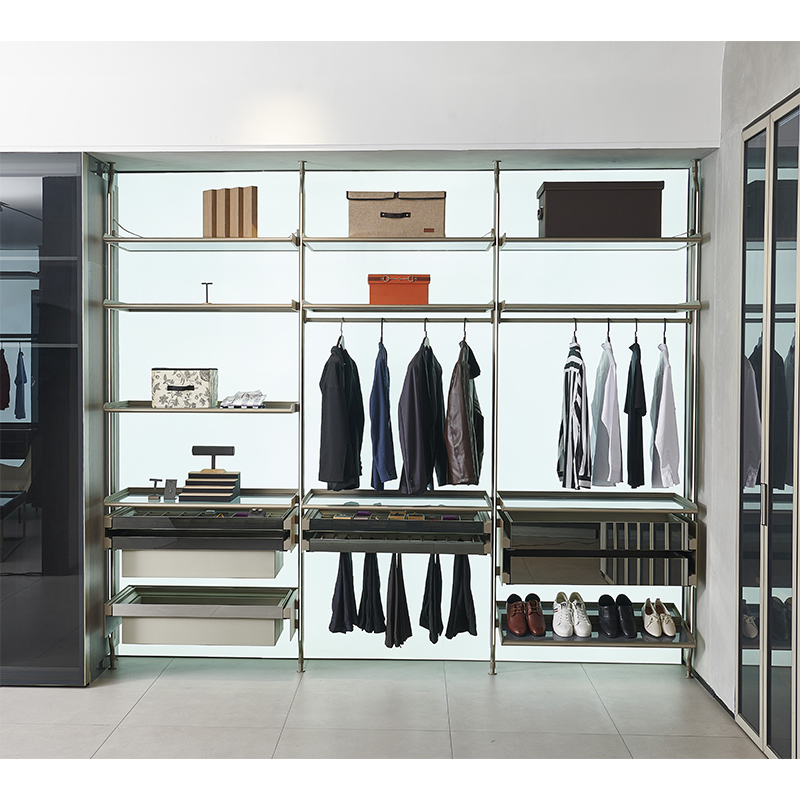
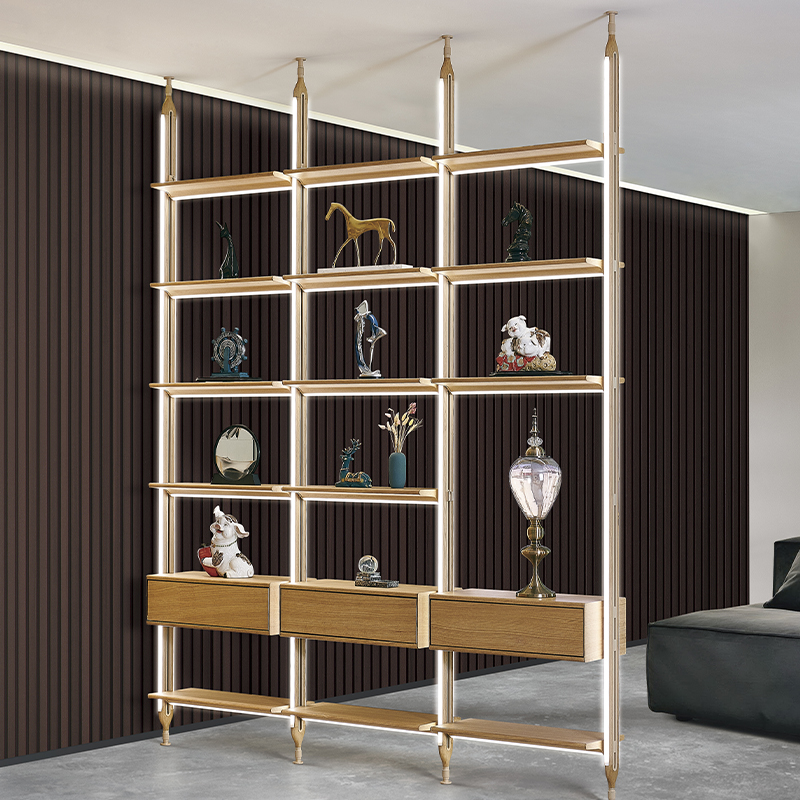
In contemporary living spaces that are increasingly open and multifunctional, how to divide functional areas and hide clutter without sacrificing a sense of openness has become a crucial issue in interior design. Thin-edge partition cabinets—living room hardware that integrates partitioning and storage functions—are quietly constructing a flexible boundary that combines practicality and aesthetics between the sofa and TV wall, and between the entryway and living area, with their slim profile, transparent structure, and exquisite details. They don't block light, yet define a space; they don't occupy space, yet provide ample storage.
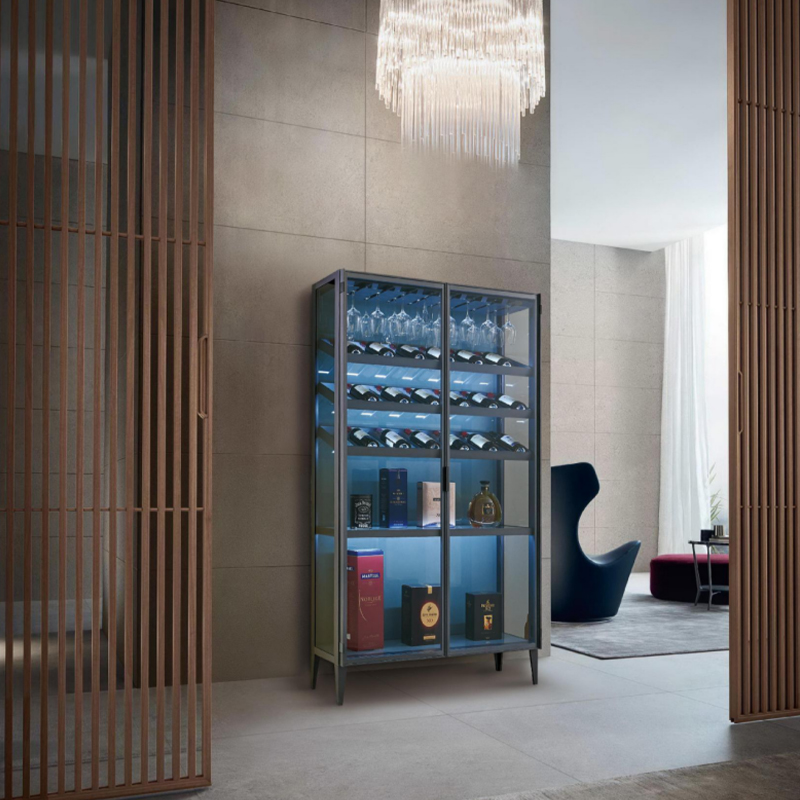
Their core appeal stems first and foremost from the exquisite balance between "thin" and "strong." Thanks to the support of a high-strength metal frame and precision connectors, the cabinet thickness is compressed to the extreme, yet it remains structurally stable, resistant to wobbling or deformation. Panels can be made of tempered glass, matte metal mesh, microporous aluminum, or ultra-thin wood veneer, ensuring visual permeability while adding different textural layers. This "light as a screen, sturdy as a frame" characteristic avoids a feeling of oppression in small apartments and becomes an elegant pause in the rhythm of space in large apartments.
In terms of functional layout, the dual roles of storage and display are naturally integrated. Open shelves are suitable for displaying books, greenery, or art pieces, forming a dynamic living gallery; closed drawers or cabinet doors hide remote controls, data cables, and other miscellaneous items, maintaining a clean surface. Some designs also integrate hidden power outlets, cable management channels, or wireless charging modules, making electronic devices more convenient to use without appearing cluttered. Every inch of depth is carefully planned to achieve efficient use of "small volume, large capacity."
A deeper value lies in respecting and guiding the flow of space. Thin-edge partition cabinets are usually installed in a floating manner or supported by thin legs, with an open bottom, creating a visually light and transparent feel without affecting the continuous extension of the floor material. Their non-enclosed structure allows air and light to pass freely, avoiding the cramped feeling of traditional wall partitions. Meanwhile, through the interplay of materials and colors, it creates a unified language with TV cabinets, bookshelves, or wall systems, reinforcing the overall design logic and making functional zoning "tangible yet boundless."
Furthermore, the hardware details showcase the core quality. Silent, buffer hinges ensure smooth and quiet opening and closing of cabinet doors; high-precision slide rails support smooth drawer operation; and metal connectors are rust-proofed, ensuring durability. These unseen craftsmanship elements collectively support the minimalist aesthetic, making beauty not merely formal but also able to withstand the test of daily use.
Ultimately, the significance of thin-edge partition cabinets lies not in what they divide, but in how they create a space that is both orderly and free. When sunlight filters through the glass shelves onto the floor, and clutter is concealed within the slim cabinet, the living room finds a delicate balance between openness and privacy, display and concealment. Because in the philosophy of modern home design, true spatial wisdom is not about building walls to enclose, but about using the most restrained lines to frame the richest aspects of life—thin as a cicada's wing, yet as solid as a rock.
Their core appeal stems first and foremost from the exquisite balance between "thin" and "strong." Thanks to the support of a high-strength metal frame and precision connectors, the cabinet thickness is compressed to the extreme, yet it remains structurally stable, resistant to wobbling or deformation. Panels can be made of tempered glass, matte metal mesh, microporous aluminum, or ultra-thin wood veneer, ensuring visual permeability while adding different textural layers. This "light as a screen, sturdy as a frame" characteristic avoids a feeling of oppression in small apartments and becomes an elegant pause in the rhythm of space in large apartments.
In terms of functional layout, the dual roles of storage and display are naturally integrated. Open shelves are suitable for displaying books, greenery, or art pieces, forming a dynamic living gallery; closed drawers or cabinet doors hide remote controls, data cables, and other miscellaneous items, maintaining a clean surface. Some designs also integrate hidden power outlets, cable management channels, or wireless charging modules, making electronic devices more convenient to use without appearing cluttered. Every inch of depth is carefully planned to achieve efficient use of "small volume, large capacity."
A deeper value lies in respecting and guiding the flow of space. Thin-edge partition cabinets are usually installed in a floating manner or supported by thin legs, with an open bottom, creating a visually light and transparent feel without affecting the continuous extension of the floor material. Their non-enclosed structure allows air and light to pass freely, avoiding the cramped feeling of traditional wall partitions. Meanwhile, through the interplay of materials and colors, it creates a unified language with TV cabinets, bookshelves, or wall systems, reinforcing the overall design logic and making functional zoning "tangible yet boundless."
Furthermore, the hardware details showcase the core quality. Silent, buffer hinges ensure smooth and quiet opening and closing of cabinet doors; high-precision slide rails support smooth drawer operation; and metal connectors are rust-proofed, ensuring durability. These unseen craftsmanship elements collectively support the minimalist aesthetic, making beauty not merely formal but also able to withstand the test of daily use.
Ultimately, the significance of thin-edge partition cabinets lies not in what they divide, but in how they create a space that is both orderly and free. When sunlight filters through the glass shelves onto the floor, and clutter is concealed within the slim cabinet, the living room finds a delicate balance between openness and privacy, display and concealment. Because in the philosophy of modern home design, true spatial wisdom is not about building walls to enclose, but about using the most restrained lines to frame the richest aspects of life—thin as a cicada's wing, yet as solid as a rock.